Let’s dive deep into what really makes studying in Canada a life-changing experience compared to other countries.
Quality of Education That Meets Global Standards
Canadian universities are known for their academic excellence and high-quality teaching methods. But the best part? You get world-class education without paying the sky-high tuition fees you’d face in countries like the USA or the UK.
-
The professors in Canadian universities are highly qualified and often involved in global research projects.
-
Students can choose from hundreds of programs that focus on practical learning instead of just theory.
-
Universities like the University of Toronto, McGill, and UBC are ranked among the world’s top institutions.
In short, Canada gives you Ivy League-level quality — but at a fraction of the cost.
Affordable Education and Living Costs
Studying abroad can be expensive, but Canada is far more affordable compared to many other developed countries.
Let’s take a quick look at the difference
| Country | Average Annual Tuition (USD) | Average Living Cost (USD/year) |
|---|---|---|
| Canada | $15,000 – $25,000 | $10,000 – $12,000 |
| USA | $25,000 – $45,000 | $12,000 – $18,000 |
| UK | $20,000 – $40,000 | $15,000 – $20,000 |
| Australia | $22,000 – $40,000 | $14,000 – $18,000 |
You can clearly see that Canada gives you more value for money. Plus, students are allowed to work part-time (up to 20 hours a week), which helps cover some of the expenses while gaining real-world experience.
Multicultural and Welcoming Environment
One of the warmest things about Canada is how inclusive and welcoming it feels. You can walk into any city — Toronto, Vancouver, Montreal — and see people from different countries, speaking different languages, and sharing their cultures with pride.
Here’s what makes the atmosphere so friendly:
-
Canadians are known for their politeness and helpful nature.
-
The country celebrates diversity, meaning you’ll never feel like an outsider.
-
You’ll find communities, food, and cultural festivals from almost every corner of the world.
In contrast, some students in the USA or Europe often face language barriers or cultural isolation. In Canada, you’re part of the family from day one. 
Post-Graduation Opportunities and Work Permits
Here’s where Canada really stands out. Once you graduate, you don’t have to pack your bags immediately. Canada offers a Post-Graduation Work Permit (PGWP), which allows students to stay and work for up to three years after completing their studies.
That’s a massive plus, especially compared to places like the UK (which until recently had stricter work visa rules) or the USA, where getting an H1B visa can be a long and uncertain process.
This opportunity gives international students a smoother path to permanent residency — something many students dream about.
Safe, Peaceful, and Stable Environment
Let’s be real — safety is one of the biggest concerns for any student planning to study abroad. And Canada is consistently ranked as one of the safest countries in the world.
-
Low crime rates.
-
Friendly local communities.
-
Political stability.
-
Respect for human rights and freedom.
Compared to other destinations where political or social tensions can make life stressful, Canada provides peace of mind. Parents can rest easy knowing their children are in a country that values safety and equality.
High Standard of Living with Nature All Around
In Canada, you don’t just study — you live beautifully. The country offers a perfect mix of modern life and natural beauty. You’ll see breathtaking mountains, clean lakes, and vibrant cities that make every day feel fresh.
Students get access to:
-
World-class public services (like healthcare and transportation).
-
Beautiful campuses with green spaces.
-
A cleaner environment with less pollution.
It’s like studying in a postcard! And guess what? Even the winters (yes, they’re cold) have their charm with snow festivals and cozy coffee shops everywhere. 

Pathway to Permanent Residency (PR)
Here’s something most students absolutely love about studying in Canada — it’s not just a temporary stay. Many graduates go on to become permanent residents.
Canada’s immigration system encourages talented students to stay, work, and eventually settle down. Through programs like:
-
Express Entry System
-
Canadian Experience Class (CEC)
-
Provincial Nominee Programs (PNP)
You can easily transition from being a student to becoming a permanent resident — and that’s not something you can say about most countries.
Strong Support for International Students
Canadian institutions go the extra mile to make sure international students feel supported and guided. Universities have dedicated international student offices that help with:
-
Accommodation and housing advice.
-
Visa extensions and work permits.
-
Career counseling and job search help.
-
Health insurance guidance.
So, even if you’re new to the country, you’ll never feel lost. There’s always someone ready to help you out.

Innovation and Research Opportunities
If you’re a student who loves exploring new ideas, Canada is the place to be. The country invests heavily in research and development, making it a top destination for innovation.
Canadian universities collaborate with industries and government organizations, giving students practical experience in real projects. Fields like:
-
Artificial Intelligence (AI)
-
Renewable Energy
-
Environmental Science
-
Medicine and Biotechnology
…are booming in Canada, and students get hands-on exposure to cutting-edge technology.
Work-Life Balance and Healthier Lifestyle 
Unlike some other countries where students are overworked and stressed, Canada promotes a healthy work-life balance. The education system encourages you to learn, explore, and enjoy your life outside the classroom.
-
There’s focus on mental health support and counseling.
-
Plenty of recreational activities like hiking, skiing, or sports.
-
A calmer lifestyle that helps students focus better.
That’s why many students describe Canada as a place where they didn’t just grow academically — they grew personally too.
Comparison Summary Table
| Factor | Canada | USA | UK | Australia |
|---|---|---|---|---|
| Tuition Fees | Affordable | High | High | High |
| Living Cost | Moderate | Expensive | Expensive | Expensive |
| Work Permit After Study | Up to 3 years | Difficult (H1B lottery) | 2 years | 2-4 years |
| Safety | Very High | Moderate | High | High |
| PR Opportunities | Easy | Difficult | Limited | Moderate |
| Multiculturalism | Excellent | High | Moderate | High |
| Weather | Cold but clean | Mixed | Mild | Warm |
Some Real-Life Student Experiences
Many students who studied in Canada often share similar stories:
“I came for education but stayed because it felt like home.”
“It’s not just the degree. It’s the friends, the lifestyle, and the opportunities that made it worth it.”
That human warmth and real-world connection make Canada stand out in a way few countries can match.
FAQs 
Q1: Is studying in Canada better than in the USA or UK?
It depends on what you value more. Canada offers affordable education, a safer environment, and easier pathways to PR — while the USA or UK might provide higher prestige but with higher costs and stricter immigration rules.
Q2: Can international students work while studying in Canada?
Yes! Students can work up to 20 hours per week during classes and full-time during breaks, helping them manage expenses.
Q3: What are the best cities to study in Canada?
Toronto, Vancouver, Montreal, Ottawa, and Calgary are among the top picks for international students.
Q4: Is it easy to get a student visa for Canada?
Canada’s visa process is transparent and fair. If you meet the academic and financial requirements, approval chances are quite high.
Q5: Can studying in Canada lead to permanent residency?
Absolutely. Many students successfully transition from study permits to work permits and then to PR through programs like Express Entry or PNP.
Final Thoughts
Studying in Canada isn’t just about earning a degree — it’s about opening doors to a new way of life. You get a globally recognized education, real-world experience, and the chance to build your future in a country that truly values diversity and growth.
So if you’re dreaming about studying abroad, Canada might just be the perfect place to turn that dream into reality. 
Let’s talk about the real errors that most students make when applying to Canada — and how to make sure you don’t fall into the same traps.
Not Researching the Right Program or University
One of the most common mistakes is applying to a program just because someone else did or because it sounds good. Many students skip proper research about the program structure, duration, or even whether it’s recognized by the Canadian government for post-graduate work permits.
Here’s the thing — not every college or diploma is eligible for a Post-Graduation Work Permit (PGWP). If your dream is to stay and work in Canada after studies, this matters a lot.
| Tip | Why It Matters |
|---|---|
| Check if the college is a Designated Learning Institution (DLI) | Only DLIs can host international students officially |
| Verify PGWP eligibility of your program | Not all programs allow you to work in Canada after graduation |
| Look at job opportunities for your program | Some fields have higher demand and easier visa pathways |
So before you apply, spend time reading the official college website. It’s not exciting, but it’ll save you a ton of disappointment later.
Ignoring Admission Requirements
You’d be surprised how many students miss simple requirements — like submitting transcripts in the right format, attaching a Statement of Purpose (SOP), or meeting the English language score criteria.
Some even think, “Maybe they’ll accept me anyway.” Spoiler alert: they won’t.
Each program has specific admission rules. If it says you need an IELTS of 6.5 with no band less than 6, they mean it. Sending incomplete applications only delays your process or leads to straight rejection.
Always make a checklist before submitting your documents. Double-check everything twice — especially your transcripts, passport copy, and recommendation letters.
Writing a Weak Statement of Purpose (SOP) 
Your SOP is your voice. It tells the admission committee who you are beyond your grades. Yet, many students treat it like a formality — copying templates online or writing generic lines like “I have always dreamed of studying abroad.”
That doesn’t stand out. What stands out is when you sound real, honest, and personal.
A strong SOP should:
-
Clearly explain why you chose your field
-
Show how your background fits the program
-
Connect why that specific college or city fits your goals
-
Mention your career plans after graduation
Think of your SOP as a story — not a report. Talk about your struggles, your interests, or what inspired you to choose this path. Universities love authenticity, not perfection.
Applying Too Late 
Another big mistake is underestimating how long the whole process takes. From collecting documents to waiting for an offer letter and visa approval — it’s not a one-week job.
Some students start applying just a few weeks before the intake deadline. That’s risky. Many universities in Canada close applications months before classes begin.
Here’s a small timeline to keep in mind:
| Task | Ideal Timeframe |
|---|---|
| Research universities & programs | 10–12 months before intake |
| Take IELTS/TOEFL | 8–10 months before intake |
| Apply for admission | 6–8 months before intake |
| Apply for visa | 3–5 months before intake |
Starting early means you can fix issues calmly instead of rushing through everything and making mistakes that could cost you your chance.
Not Paying Attention to Financial Proof
Canada takes financial stability seriously. You must show you can afford your tuition, living costs, and other expenses. Some students only show partial funds or think fake statements will work — which can lead to an instant visa rejection.
The immigration officer checks your financial proof to see if you can genuinely support yourself. If the numbers don’t add up, it raises red flags.
Make sure your bank statements:
-
Are recent and genuine
-
Show enough balance for at least one year’s tuition + living cost (around CAD 20,000 or more)
-
Are consistent with your sponsor’s income
If your parents or relatives are sponsoring you, their documents should clearly show their relationship to you and source of income. Transparency builds trust.
Ignoring the Visa Documentation Details
Your study permit (visa) is just as important as your admission. Many students make errors like missing signatures, uploading wrong documents, or not including the Letter of Explanation.
Sometimes they even forget to include the tuition receipt or GIC (Guaranteed Investment Certificate) proof. That’s a major red flag for visa officers.
 Always organize your visa file properly:
-
Acceptance Letter
-
Tuition Fee Receipt
-
GIC or Financial Proof
-
Medical Report
-
Passport & Photos
-
SOP for Visa (Study Plan)
-
Academic Documents
Double-check everything before submission. Even one missing file can lead to refusal.
-
Searching for a place to stay? Check out how to find accommodation near Canadian universities — Learn more
Depending Too Much on Agents
Education consultants can help, yes — but some students rely too much on them. They sign papers without reading, pay hidden charges, or even let the agent write their SOP. That’s risky.
Remember, it’s your future. You must understand every form you sign and every fee you pay. Not all agents are transparent, and some might push you toward colleges that give them higher commissions, not the ones best for you.
Tip: Always cross-check information from agents with the official university or IRCC (Immigration, Refugees and Citizenship Canada) websites. You can even verify your offer letter with the college to make sure it’s real.
Ignoring Small but Important Details 
It’s funny how small details can make or break your application. For instance, using an unprofessional email like [email protected] (yes, it happens ), submitting scanned documents with low quality, or writing inconsistent information in forms.
Everything you submit represents your seriousness. Use a professional email, name your documents clearly, and make sure your dates, names, and addresses match across all papers.
Not Preparing for the Visa Interview (if required)
While many students don’t face interviews, some are asked to attend one — especially if there’s confusion about their intent. And sadly, many fail simply because they’re not prepared.
If you’re called for an interview, be calm and clear. The officer wants to see if you’re a genuine student. Don’t memorize robotic answers. Speak naturally about your study plans and how they align with your career.
Sample question: Why did you choose this program in Canada?
A good answer connects your academic interest, the program’s benefits, and your long-term goal — not just “because it’s a good country.”
Not Understanding Immigration Rules After Arrival
Even after getting the visa, some students make mistakes by violating study permit conditions — like working more than allowed hours or missing classes. These can affect your future PR or visa renewal.
Always read your study permit carefully. Follow the rules, maintain good grades, and keep your documents up to date. It’s not just about getting to Canada — it’s about staying there successfully.
Overlooking Mental and Cultural Preparation
Let’s be honest — studying abroad isn’t just about academics. It’s a huge life change. Many students forget to prepare mentally for the cultural shock, homesickness, and weather differences.
Canada can be really cold in some regions, and adapting to a new lifestyle takes time. Join student communities online, talk to current students, and learn basic local customs. This makes your transition smoother and more enjoyable.
Simple Checklist to Avoid Mistakes
| Step | What to Do |
|---|---|
| 1 | Research DLIs and PGWP-eligible programs |
| 2 | Meet exact admission and IELTS requirements |
| 3 | Write a personal, authentic SOP |
| 4 | Apply 6–10 months before your intake |
| 5 | Prepare real and complete financial proof |
| 6 | Organize visa file neatly |
| 7 | Cross-check every document with official sources |
| 8 | Stay honest and professional in every step |
Final Thoughts
Applying to Canada isn’t complicated — it’s just about being careful, honest, and well-prepared. Most rejections happen not because students are unqualified, but because they rush, ignore details, or rely on someone else too much.
Remember, this is your dream. Treat every step with seriousness, from your first Google search to your final visa submission. And don’t forget — the effort you put in now will pay off when you finally step foot on that campus and realize, “I did it.”
FAQs
1. Can I apply to Canada without IELTS?
Yes, but only if your institution accepts alternative tests like Duolingo or TOEFL, or if your previous education was in English. Always confirm this with the university.
2. How much money should I show for my Canadian study visa?
Generally, you should show enough for one year of tuition plus living costs — roughly around CAD 25,000–30,000 depending on your city.
3. Is it okay to use a study abroad agent?
Yes, but make sure they are registered and transparent. Always verify all documents yourself.
4. How early should I start applying for Canada?
Ideally, start 10–12 months before your intended intake. This gives enough time for IELTS, application, and visa processing.
5. What’s the most common reason for Canadian student visa rejection?
Usually, weak SOPs, incomplete financial proof, or unclear study intentions lead to rejections.
But before you book that flight, there are some very important things you need to know. Trust me — being prepared can make your transition a lot smoother and less stressful. So, let’s go through the most important stuff you should know before moving to Canada for your studies.
Understanding the Education System in Canada
Canada offers one of the best education systems in the world. But what’s really nice is that it’s flexible and offers multiple pathways. You can study at universities, colleges, or polytechnic institutes — and all of them provide recognized degrees and diplomas.
Here’s a quick look at how the system is structured:
| Level | Type of Program | Duration | Example Qualification |
|---|---|---|---|
| Undergraduate | Bachelor’s Degree | 3-4 years | BSc, BA, BEng |
| Postgraduate | Master’s Degree | 1-2 years | MBA, MSc |
| College Diploma | Technical/Practical Skills | 1-3 years | Diploma or Advanced Diploma |
| Doctoral | Research-Oriented | 3-6 years | PhD |
Tip: Many students begin at colleges to save money and later transfer to universities for higher-level degrees. This is known as a “college-to-university pathway.”
Understanding the Cost of Living
Let’s be honest — studying abroad isn’t cheap. But Canada offers a balance between quality education and affordable living (compared to the US or UK). Still, you’ll need to plan your budget carefully.
Here’s a basic breakdown of average monthly expenses for international students:
| Expense | Average Monthly Cost (in CAD) |
|---|---|
| Rent (shared accommodation) | $600 – $1,200 |
| Food & Groceries | $300 – $500 |
| Transportation | $80 – $150 |
| Internet & Phone | $60 – $100 |
| Health Insurance | $60 – $100 |
| Miscellaneous | $100 – $200 |
Many students work part-time to help cover these expenses (more on that below).
Weather in Canada 
Now, this is something that everyone talks about — and for good reason. Canada is famous for its cold winters. Depending on where you live, temperatures can drop below -20°C in winter!
But don’t worry — Canadians know how to handle the cold. You’ll find heated buses, underground walkways, and well-insulated houses.
Still, you should invest in a good winter jacket, thermal wear, boots, and gloves.
Fun fact: The weather isn’t cold everywhere all year. Cities like Vancouver or Victoria have milder climates — more rain, less snow. So, research the city before you choose your school.
Work While You Study
One of the best parts about studying in Canada is that you can legally work while studying. International students with a valid study permit can work up to 20 hours per week during semesters and full-time during breaks.
Common part-time jobs for students include:
-
Barista or restaurant staff
-
Retail store assistant
-
Delivery jobs
-
Library or campus jobs
-
Freelancing online
Tip: Always prioritize your studies first. Canada takes academic integrity seriously. If your grades drop, it can affect your study permit renewal or future immigration plans.
Finding Accommodation
When you first arrive, you’ll need to decide where to stay — on-campus or off-campus.
-
On-campus housing: Convenient, safe, and often includes meals. It’s great for meeting new friends.
-
Off-campus housing: Usually cheaper, but you’ll need to handle bills, groceries, and transportation yourself.
Here’s a simple comparison:
| Type | Cost (per month) | Pros | Cons |
|---|---|---|---|
| On-Campus | $800 – $1,500 | Safe, close to classes | Limited privacy, may be more expensive |
| Off-Campus | $600 – $1,200 | More freedom | Commute, must find on your own |
Pro Tip: Don’t send money to landlords without visiting or confirming with your university’s housing office. There are scams targeting new students.
Health Insurance and Medical Care
Canada has excellent healthcare — but it’s not free for international students. Some provinces (like British Columbia or Ontario) require you to buy private health insurance if you’re not covered by a public plan.
Most universities automatically include health insurance in tuition, but always confirm.
Check what’s covered — doctor visits, prescriptions, emergency care, etc.
Cultural Differences & Social Life
Canada is super multicultural. You’ll find people from every corner of the world — which means it’s easy to make friends and feel at home.
Still, the culture might feel a bit different at first. Canadians value politeness, punctuality, and personal space. People say “sorry” a lot (even when it’s not their fault ).
Try joining clubs, student organizations, or community events. They’re great for networking and adjusting to local life.
Public Transportation
Most Canadian cities have efficient and safe public transport systems — buses, subways, trams, and trains.
You can buy monthly passes that give unlimited rides. Students often get discounts, so check with your school for student transit cards.
Tip: Apps like Google Maps or Transit App make it easy to plan your routes.
Opening a Bank Account
You’ll need a local Canadian bank account to pay bills, receive money, or work part-time. The process is simple — just bring your passport, study permit, and university acceptance letter.
Popular banks for students include:
-
RBC (Royal Bank of Canada)
-
TD Canada Trust
-
Scotiabank
-
CIBC
-
BMO
Some offer student-friendly accounts with no monthly fees and bonuses like gift cards or cashback.
Mobile & Internet Setup
You’ll definitely need a Canadian SIM card and internet connection. Major providers include Bell, Rogers, and Telus, but smaller ones like Freedom Mobile or Fido can be cheaper.
Average phone plans cost around $40–$80/month depending on data and usage.
Study Permit and Visa Essentials
Before anything else, you’ll need a study permit — which is basically your student visa. You can apply online through the IRCC (Immigration, Refugees and Citizenship Canada) website.
Make sure you have: Letter of acceptance from a Designated Learning Institution (DLI) Proof of funds (bank statements or sponsor letter) Passport and photos Statement of Purpose (SOP) Medical exam (if required)
Once approved, you’ll receive your Port of Entry (POE) Letter and can travel to Canada.
Settling In After Arrival 
The first few weeks can feel overwhelming — new city, new people, new culture. That’s totally normal.
Here’s a small checklist to help you settle faster: Attend university orientation Get your Social Insurance Number (SIN) for work Register for health insurance Open a bank account Get your student ID Explore your neighborhood
Pro Tip: Keep copies of all your important documents in both paper and digital formats.
Understanding Canadian Etiquette
Canadians are friendly, but there are some unspoken rules:
-
Always say please, thank you, and sorry
-
Don’t interrupt others while speaking
-
Tip restaurant servers (usually 15–20%)
-
Respect queues and public spaces
Little gestures go a long way in fitting in!
Permanent Residency Opportunities After Study
Many students choose Canada because of its easy pathways to permanent residency (PR) after graduation.
After your studies, you can apply for a Post-Graduation Work Permit (PGWP) — which lets you work in Canada for up to 3 years. With Canadian work experience, you can later apply for PR through programs like Express Entry or Provincial Nominee Programs (PNP).
It’s a huge plus if you plan to build your career in Canada long-term.
Challenges You Might Face (And How to Deal With Them)
Of course, studying abroad isn’t all sunshine and rainbows. Some challenges include:
-
Feeling homesick
-
Dealing with the cold
-
Managing finances
-
Balancing work and study
-
Understanding new accents or slangs
But remember — every student goes through it. Joining international student groups or talking to student counselors really helps.
Helpful Resources for New Students
| Resource | Purpose |
|---|---|
| IRCC Website | Visa and immigration information |
| EduCanada | Official info about studying in Canada |
| CIC News | Updates on immigration and student rules |
| Yelp / Google Maps | Local reviews for food, housing, etc. |
| Reddit (r/ImmigrationCanada, r/StudyInCanada) | Real experiences from other students |
Final Thoughts
Moving to Canada for studies is a life-changing experience. You’ll learn independence, build international connections, and open doors to new opportunities.
Yes, it takes courage to start over in a new country — but with the right preparation and mindset, you’ll not just survive… you’ll thrive.
FAQs
Q1: How much money do I need for my first year in Canada?
You’ll need to show proof of funds around CAD $20,000–$25,000 for tuition and living expenses. Actual spending depends on your city and lifestyle.
Q2: Can international students get scholarships?
Yes! Many universities and provincial governments offer scholarships for merit or financial need. Always check your school’s financial aid page.
Q3: Can I bring my family with me?
Yes, your spouse can apply for an open work permit, and your children can attend school in Canada.
Q4: What are the cheapest cities for students in Canada?
Cities like Winnipeg, Halifax, and Saskatoon are generally more affordable than Toronto or Vancouver.
Q5: How do I overcome homesickness?
Stay in touch with family, make new friends, and explore your surroundings. Joining student clubs really helps!
In Short:
Studying in Canada is not just about earning a degree — it’s about growing as a person. You’ll face challenges, yes, but you’ll also find kindness, diversity, and endless opportunities waiting for you.
So, pack your dreams, stay positive, and get ready for a new adventure under the northern lights.
]]>This guide will walk you through exactly how to find, apply for, and win scholarships in Canada. We’ll talk about the types of scholarships, eligibility, application tips, and even share a few insider secrets to help you stand out from the crowd. So, let’s dive in!
Why Choose Canada for Higher Studies
Canada is famous for its world-class universities, affordable tuition compared to the US or UK, and welcoming atmosphere for international students. Whether you want to study engineering, computer science, medicine, or business — Canada has something for everyone.
Another great thing is that Canadian universities focus on diversity and inclusion, which means they actively encourage students from around the world to apply. And many scholarships are designed specifically for international students — so you already have a good chance to qualify!
Different Types of Scholarships in Canada
Not all scholarships are the same. Some depend on your academic performance, others on your financial situation, and a few on your leadership qualities or community service. Let’s take a quick look at the main types
| Type of Scholarship | Description | Who Can Apply |
|---|---|---|
| Merit-Based Scholarships | Given for excellent academic achievements (high GPA, awards, etc.) | Students with strong grades |
| Need-Based Scholarships | For students who face financial difficulties | Students with low-income backgrounds |
| Government-Funded Scholarships | Offered by Canadian or provincial governments | International students from selected countries |
| University-Specific Scholarships | Provided by universities themselves | Students applying to that university |
| Research Scholarships | For postgraduate or research programs | Master’s or Ph.D. candidates |
| Sports & Talent-Based Scholarships | For students with athletic or artistic talent | Athletes, musicians, and artists |
So before applying, figure out which category you fit best into.
Top Government Scholarships in Canada for International Students
Here are some of the most popular scholarships you should know about:
-
Vanier Canada Graduate Scholarships – This one’s for doctoral students (Ph.D.) who have shown leadership skills and top academic achievements.
-
Banting Postdoctoral Fellowships – Aimed at postdoctoral researchers in natural and social sciences or health studies.
-
Canada-ASEAN Scholarships and Educational Exchanges for Development (SEED) – Great for students from ASEAN countries wanting short-term study in Canada.
-
Lester B. Pearson International Scholarship (University of Toronto) – A full-ride scholarship covering tuition, books, residence, and more.
-
Ontario Graduate Scholarship (OGS) – Offered by the Ontario government for graduate-level students in participating universities.
-
University of British Columbia (UBC) International Leader of Tomorrow Award – For students who demonstrate both excellence and financial need.
Top Universities in Canada Offering Scholarships
| University Name | Popular Scholarships Offered | Level |
|---|---|---|
| University of Toronto | Lester B. Pearson Scholarship | Undergraduate |
| McGill University | Entrance Scholarships | Undergraduate & Graduate |
| University of British Columbia | International Major Entrance Scholarship | Undergraduate |
| University of Alberta | International Student Scholarships | Undergraduate & Graduate |
| University of Waterloo | Merit-Based Awards | Undergraduate & Graduate |
| University of Manitoba | Graduate Fellowships | Master’s & Ph.D. |
Each university has its own application process and eligibility rules, so always check their official websites before applying.
How to Find the Right Scholarship for You
Finding scholarships might sound tricky, but with the right approach, it’s not that hard. Here’s what you can do:
-
Start Early: Begin searching at least a year before your intended program start date.
-
Use Official Scholarship Databases: Visit websites like EduCanada.ca or ScholarshipsCanada.com to browse available programs.
-
Follow Universities’ Social Media Pages: Universities often post scholarship updates and deadlines on their official accounts.
-
Contact Admission Offices: Don’t be shy about emailing the admissions or international student office — they’re there to help!
Eligibility Criteria – What You Need to Qualify
The requirements can vary from one scholarship to another, but most commonly, you’ll need:
-
A strong academic record (high GPA or equivalent)
-
Proof of English proficiency (IELTS, TOEFL, or PTE)
-
Acceptance letter from a Canadian university
-
Statement of Purpose (SOP) or Personal Essay
-
Recommendation Letters
-
Evidence of extracurricular activities or community service (for leadership-based scholarships)
Tip : Even if your grades aren’t perfect, you can still win scholarships if you highlight your unique achievements or personal story well.
How to Apply for Scholarships in Canada – Step by Step Guide
Applying for a scholarship can feel like a lot of work, but let’s make it simple:
-
Choose a Program and University – First, pick what you want to study and where.
-
Check Scholarship Options – Go to the official university website to see available scholarships for your course.
-
Check the Eligibility Requirements – Make sure you meet all academic and language requirements.
-
Prepare Your Documents:
-
Academic transcripts
-
English test results
-
Recommendation letters
-
Statement of purpose
-
Passport copy
-
-
Apply Before the Deadline – Don’t wait until the last moment. Canadian institutions are strict with deadlines.
-
Follow Up Politely – If you don’t hear back, send a polite follow-up email asking about the application status.
Tips to Increase Your Chances of Winning a Scholarship
Now here’s where most students miss out — even with good grades, they don’t know how to make their application shine.
-
Write a compelling personal essay – Be honest and passionate. Explain why you want to study in Canada and how you’ll contribute to your community after returning home.
-
Show leadership & volunteering – Scholarships often reward students who give back to society.
-
Get strong recommendation letters – Ask teachers who know you well to write about your strengths.
-
Double-check your documents – Typos, missing papers, or wrong formats can ruin an otherwise perfect application.
-
Stay authentic – Don’t try to sound “too professional.” Just write like yourself — but clearly and confidently.
Common Mistakes Students Make 
Let’s be real — everyone makes mistakes when applying for scholarships. But you can avoid these:
-
Applying to only one or two scholarships (apply for many!).
-
Missing deadlines because of time zone confusion.
-
Using the same personal statement for all scholarships.
-
Ignoring smaller or local scholarships — they’re often easier to win.
-
Not reading the fine print (some scholarships only cover tuition, not living costs).
How Much Scholarships Usually Cover
| Scholarship Type | Average Coverage |
|---|---|
| Fully-Funded | Tuition, housing, books, and sometimes travel |
| Partial | Only part of tuition or living costs |
| Entrance Award | One-time payment (CAD 2,000 – 10,000) |
| Research Grants | Monthly stipend for postgraduate students |
So even if a scholarship doesn’t cover everything, it still reduces your overall expenses — sometimes by a huge amount.

Best Time to Apply for Scholarships
Most Canadian universities accept international applications between October and March. However, deadlines vary depending on the program and funding type.
Always mark important dates on your calendar. Submitting early also shows seriousness — and sometimes gives you priority consideration.
Life After Getting a Scholarship in Canada
Once you’ve received that golden “Congratulations” email, things move fast. You’ll need to accept your offer, apply for a student visa, and make travel arrangements.
The great part? Most scholarships also connect you with mentorship programs, workshops, or alumni networks. These are amazing for building career connections while you study.
Some Extra Pro Tips from Real Students
-
“Start preparing at least 6 months before the deadline.”
-
“Practice writing your Statement of Purpose — that’s what makes the biggest difference.”
-
“Don’t just apply for big-name scholarships; smaller awards add up too.”
-
“Keep checking your email regularly — sometimes they ask for additional documents.”
Frequently Asked Questions (FAQs)
Q1: Can I apply for multiple scholarships at once?
Yes, you can! In fact, it’s recommended to apply for as many as you’re eligible for. It increases your chances of getting at least one.
Q2: Do I need to have an admission offer first?
Some scholarships require you to already have an offer from a Canadian university, but not all. Always read the requirements carefully.
Q3: What is the minimum GPA required?
It depends on the scholarship, but most need at least a 3.0 out of 4.0 GPA or equivalent.
Q4: Do I have to return to my home country after studying?
Some government-funded scholarships may require you to return home after your studies. Check the terms and conditions before applying.
Q5: Are there scholarships for short courses or diplomas?
Yes, there are! Many institutions offer scholarships for vocational or professional diploma programs too.
Q6: What if I don’t get a scholarship?
Don’t worry — you can still apply for part-time jobs, assistantships, or bursaries once you’re in Canada.
Final Thoughts
Getting a scholarship to study in Canada isn’t just about being a top student — it’s about showing passion, determination, and purpose. When your story connects with the scholarship’s values, your chances rise dramatically.
So, take your time, research carefully, write your essay from the heart, and send in that application with confidence. Your dream of studying in Canada could be much closer than you think.
External Resource (for more help):
EduCanada Scholarships Portal — Official source for all Canadian scholarships for international students.
Tuition Fees – The Biggest Expense
Let’s start with the most obvious cost: tuition fees. This is what most of your money will go towards. The fees depend on what you study and where.
Generally, universities in big cities like Toronto, Vancouver, or Montreal cost more than those in smaller cities. Also, programs like Medicine, Engineering, and MBA are more expensive than courses like Arts or Humanities.
Here’s a quick table to give you a clearer idea:
| Program Type | Average Annual Fees (CAD) | Average Annual Fees (USD) |
|---|---|---|
| Undergraduate Programs | 15,000 – 35,000 | 11,000 – 26,000 |
| Postgraduate Programs (Master’s) | 17,000 – 40,000 | 12,500 – 29,000 |
| MBA Programs | 30,000 – 60,000 | 22,000 – 44,000 |
| PhD Programs | 7,000 – 25,000 | 5,000 – 18,000 |
| Diploma or Certificate | 10,000 – 18,000 | 7,000 – 13,000 |
Some public universities like University of Manitoba, Memorial University of Newfoundland, and University of Saskatchewan offer lower tuition fees compared to popular ones like University of Toronto or UBC.
Tip: Always check if the program offers scholarships or assistantships; they can reduce your costs significantly.
Cost of Living – Your Daily Life Expenses
Living in Canada can be affordable or costly depending on your city and lifestyle. Big cities like Vancouver and Toronto are expensive, while smaller cities such as Winnipeg, Halifax, or Quebec City are much cheaper.
Here’s an approximate monthly breakdown of common expenses:
| Expense Type | Average Monthly Cost (CAD) | Notes |
|---|---|---|
| Accommodation | 600 – 1,500 | Depends on location and sharing |
| Food & Groceries | 250 – 400 | Cooking at home is cheaper |
| Transportation | 80 – 120 | Student passes can save money |
| Internet & Mobile | 50 – 100 | Check student plans |
| Miscellaneous | 100 – 200 | Entertainment, clothes, etc. |
So overall, the total monthly cost of living can range from CAD 1,000 to CAD 2,300, which means roughly CAD 12,000 to CAD 25,000 per year.
Accommodation Options – Where You’ll Stay
You can live on-campus or off-campus. Each has pros and cons:
-
On-campus housing: Convenient and safe but slightly expensive. Average cost: CAD 800–1,500/month.
-
Off-campus shared apartments: Cheaper, especially if you share with friends. Average cost: CAD 500–1,200/month.
-
Homestay: Living with a local Canadian family. Costs around CAD 700–1,000/month, and meals are often included.
Pro Tip: If you’re new to Canada, staying on-campus for the first semester can make life easier until you get familiar with the area.
Food and Groceries – Eating Smart
Food costs depend a lot on how and where you eat. Eating out every day will burn your budget quickly. Cooking your own meals can save a lot.
| Food Option | Average Cost (CAD) |
|---|---|
| Restaurant meal | 15 – 25 per meal |
| Fast food combo | 10 – 12 per meal |
| Monthly groceries | 250 – 400 |
| Coffee (regular) | 2 – 5 |
A simple tip: Buy in bulk from stores like Costco, Walmart, or No Frills, and shop during discounts.
Transportation – Getting Around
Most Canadian cities have excellent public transportation systems. Students often get discounts through student ID cards.
| City | Monthly Student Pass (CAD) |
|---|---|
| Toronto | 128.15 |
| Vancouver | 45 – 100 |
| Montreal | 57 |
| Winnipeg | 80 |
| Calgary | 82 |
You can also buy a used bicycle or walk if you live near your university.
Health Insurance – Mandatory but Useful
All international students in Canada must have health insurance. The coverage depends on the province you live in. Some provinces (like British Columbia or Alberta) include students in their public health care plan, while others require private insurance.
| Province | Health Insurance Type | Average Annual Cost (CAD) |
|---|---|---|
| Ontario | Private | 600 – 900 |
| British Columbia | Public (MSP) | 75/month |
| Alberta | Public | Free for students |
| Quebec | Private/Public | 500 – 800 |
Always check with your university about health coverage before arrival.
Study Materials – Books and Supplies
Books can be expensive! Depending on your program, you might spend CAD 500 – 1,500 per year.
Tip: Buy used books, borrow from the library, or look for online PDFs to save money.
Application Fees and Visa Costs
Before you even start your studies, there are some costs you must handle:
| Item | Average Cost (CAD) |
|---|---|
| Application fee per university | 100 – 250 |
| Study permit (visa) | 150 |
| Biometrics | 85 |
| Medical examination | 100 – 200 |
| Flight tickets | 900 – 2,000 (depending on your country) |
You might also need to show proof of funds for your visa. The Canadian government requires students to have at least CAD 20,635 (as of 2025) in their bank account, excluding tuition.
Scholarships and Financial Aid
Good news — Canada offers many scholarships for international students. You can apply for:
-
Government scholarships (like Vanier Canada Graduate Scholarships or Canada-ASEAN Scholarships).
-
University scholarships (like UBC International Leader of Tomorrow Award or University of Toronto’s Lester B. Pearson Scholarship).
-
External scholarships from organizations or foundations.
These can cover tuition, living costs, or even full study expenses.
Tip: Maintain good grades and participate in community activities — many scholarships look at both academics and extracurriculars.

Part-Time Work – Earn While You Learn
International students can work up to 20 hours per week during the semester and full-time during breaks.
| Job Type | Average Hourly Pay (CAD) |
|---|---|
| On-campus job | 14 – 18 |
| Off-campus (restaurant, retail) | 15 – 22 |
| Internships (program-related) | 18 – 30 |
If you manage your time well, you can cover your monthly living costs through part-time work.
Total Estimated Cost Per Year (CAD)
| Expense Category | Low Range (CAD) | High Range (CAD) |
|---|---|---|
| Tuition Fees | 15,000 | 40,000 |
| Living Costs | 12,000 | 25,000 |
| Health Insurance | 600 | 900 |
| Books & Supplies | 500 | 1,500 |
| Miscellaneous | 1,000 | 2,000 |
| Total (Approx.) | 29,100 | 69,400 |
So, on average, a student can expect to spend around CAD 30,000 – 50,000 per year, including everything.
Hidden Costs Many Students Forget
-
Winter clothes: Canada gets cold! Expect to spend CAD 300 – 600 on proper jackets and boots.
-
Bank charges: Small, but they add up (CAD 5 – 10/month).
-
Student fees: Universities charge extra fees for sports, libraries, or health centers (CAD 300 – 800/year).
Ways to Save Money as a Student
-
Use student discounts everywhere (transport, cinema, restaurants).
-
Share your apartment or meals.
-
Use public libraries and free campus Wi-Fi.
-
Cook at home instead of eating out.
-
Look for second-hand furniture and books.
Small habits like these can save you hundreds of dollars each month.
Is It Worth the Cost?
Absolutely! Studying in Canada is an investment in your future. You get world-class education, global recognition, and a chance to live in one of the safest and most diverse countries. Plus, with post-graduate work permits and the chance to settle permanently, many students see Canada as more than just an education destination — it’s a life-changing opportunity.
FAQs
Q1: How much does it cost to study in Canada per year?
A: It usually costs between CAD 30,000 and 50,000 per year, including tuition, housing, and living expenses.
Q2: Is Canada cheaper than the USA or UK for international students?
A: Yes, on average, Canada is more affordable than both the USA and UK, especially when it comes to tuition and health insurance.
Q3: Can international students study for free in Canada?
A: Yes, but only if you win a fully-funded scholarship. Many universities and the Canadian government offer these opportunities.
Q4: Can I work while studying in Canada?
A: Yes, you can work up to 20 hours per week during classes and full-time during holidays.
Q5: Which are the cheapest universities in Canada for international students?
A: Some affordable options include University of Saskatchewan, Memorial University of Newfoundland, and Brandon University.
Final Thoughts
Studying in Canada may not be cheap, but it offers great value for money. With proper planning, budgeting, and maybe a part-time job or scholarship, you can manage your expenses smartly. The education, experiences, and exposure you gain will be worth every penny.
If you plan wisely, Canada can be your gateway to a bright and successful future — and that’s something no price tag can define.
]]>So, in this guide, I’ll walk you through a complete step-by-step process to apply for Canadian universities in the simplest way possible. I’ll also include some quick tips, a few tables, and FAQs to make everything super easy to understand.
Why Study in Canada?
Before jumping into the process, let’s take a quick look at why so many students choose Canada.
| Benefits | Description |
|---|---|
| High-Quality Education | Canada is home to top universities like University of Toronto, McGill, and UBC. |
| Affordable Tuition | Compared to the USA or UK, Canadian tuition and living costs are much lower. |
| Work Opportunities | You can work part-time during your studies and full-time in breaks. |
| Post-Graduation Work Permit (PGWP) | After graduation, you can stay and work in Canada for up to 3 years. |
| Diverse and Safe Environment | Students from all around the world live peacefully and enjoy multicultural life. |
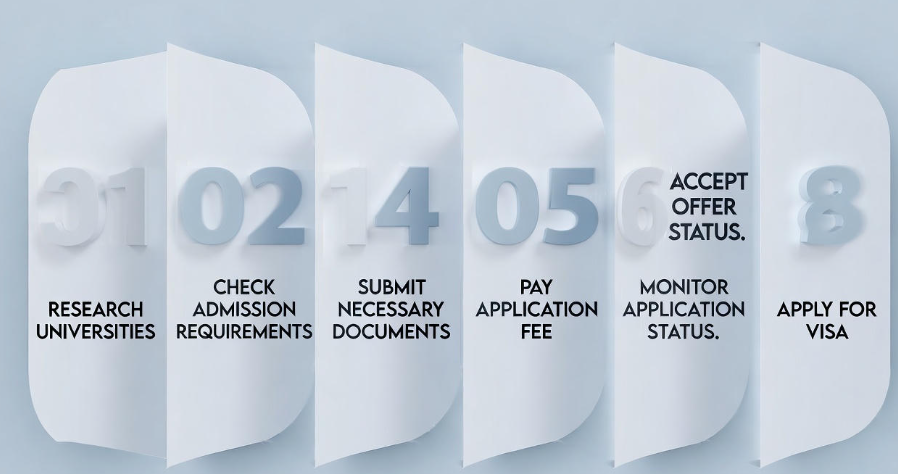
Step 1: Research and Shortlist Universities
The very first step is to do your homework — and I don’t mean assignments! You need to research which universities and programs match your academic background, interests, and career goals.
Check these things while shortlisting:
-
The ranking and reputation of the university
-
The program’s curriculum and structure
-
Location and climate (Canada has very cold winters!)
-
Tuition fees and cost of living
-
Availability of scholarships and financial aid
Example:
If you’re interested in Computer Science, you might consider:
-
University of Toronto (Ontario)
-
University of British Columbia (Vancouver)
-
University of Waterloo (Ontario)
Take your time with this step — it’s the foundation of your journey.
Step 2: Check Admission Requirements
Each university in Canada sets its own admission criteria. So once you shortlist, go to their official websites and look carefully at the requirements for your desired program.
Here’s what they usually ask for:
-
High school or bachelor’s transcripts (depending on program level)
-
English language test scores (IELTS, TOEFL, or PTE)
-
Letter of Intent or Statement of Purpose (why you want to study there)
-
Letters of Recommendation from teachers or employers
-
Resume/CV
-
Application fee payment
Pro tip: Some programs, like Architecture or Fine Arts, may also ask for a portfolio.
Language Requirements Example Table:
| Test | Minimum Score (Undergraduate) | Minimum Score (Postgraduate) |
|---|---|---|
| IELTS | 6.0 overall (no band less than 5.5) | 6.5–7.0 overall |
| TOEFL iBT | 80–90 | 90–100 |
| PTE | 58 | 65 |
Step 3: Prepare Your Documents
Now comes the paperwork part — which many students underestimate. Get everything ready before applying.
Here’s a simple checklist: Academic transcripts (in English, attested copies) Valid passport (must be valid for at least the duration of study) Language test result (IELTS/TOEFL) Statement of Purpose (SOP) Reference/Recommendation letters Updated CV or Resume Passport-size photographs
Make sure your documents are scanned clearly and saved as PDFs. Use proper file names like SOP_YourName.pdf or Transcript_YourName.pdf so you don’t get lost in your own files later.
Step 4: Apply Online Through the University Portal
Almost all Canadian universities have online application portals. You don’t have to mail physical documents (unless specified).
Steps are usually like this:
-
Go to the official university website.
-
Create an account on their application portal.
-
Fill in your personal and academic details carefully.
-
Upload the required documents.
-
Pay the application fee (usually between CAD $100–$150).
-
Submit and wait for confirmation email.
 It might take a few weeks or even months before you hear back — so be patient.
Important Tip: Apply early. The earlier you apply, the better your chances, especially for scholarships and visa processing.
Step 5: Wait for the Offer Letter
If you meet all the requirements and impress the admission team, you’ll receive either:
-
Conditional Offer Letter: You need to submit pending documents (like final grades or English score).
-
Unconditional Offer Letter: You are officially accepted — congrats!
Once you get this letter, you’ll have to confirm your acceptance by paying a deposit fee (varies by university).
Example:
University of Toronto may ask for a CAD $500–$1,000 deposit to secure your seat.
Step 6: Apply for a Canadian Study Permit (Visa)
After getting the offer letter, the next big step is applying for a Canadian Study Permit, which is basically your student visa.
You can apply online through the IRCC (Immigration, Refugees, and Citizenship Canada) website.
-
Thinking long-term? Discover career growth opportunities in Canada after study — Read more here
Documents needed:
-
Offer letter from a Designated Learning Institution (DLI)
-
Proof of financial support (bank statement, sponsorship letter, or GIC)
-
Valid passport
-
Passport-size photos
-
Statement of Purpose (why you want to study in Canada)
-
Immigration medical exam (from a panel physician)
-
Visa application fee (about CAD $150)
Proof of Funds Example:
| Type of Expense | Minimum Required (for one year) |
|---|---|
| Tuition Fees | Around CAD $15,000 |
| Living Expenses | CAD $10,000 (outside Quebec) |
| Additional Member (spouse/child) | CAD $4,000–$5,000 extra |
Step 7: Get Your Biometrics and Medical Done
Once you apply for a visa, you’ll get a Biometric Instruction Letter asking you to visit a nearby VAC (Visa Application Centre).
You’ll need to:
-
Give fingerprints and a photo
-
Possibly complete a medical exam (if not already done)
These are mandatory for most international students.
Step 8: Wait for Visa Decision
After completing all the steps, the final waiting period begins. Processing time varies — usually between 3 to 8 weeks depending on your country.
During this time, you can check your application status online on the IRCC portal.
If approved, you’ll receive a Port of Entry (POE) Letter of Introduction. This isn’t your visa but a document you’ll show to the immigration officer when you land in Canada.
Step 9: Prepare for Your Journey
Now that your visa is approved — congratulations! It’s time to get ready for the big move.
Here’s a mini checklist before you fly: Book flight tickets early (they get expensive fast) Arrange accommodation (on-campus or off-campus) Pack warm clothes (Canadian winters can be freezing ) Carry important documents in hand luggage Keep digital copies of all important papers
You should also join your university’s social groups or WhatsApp communities for international students. They’re super helpful!
Step 10: Arrive in Canada and Start Your New Journey
When you land, show your passport, visa documents, and POE letter to the immigration officer. They’ll issue your Study Permit, and then you’re officially ready to begin your student life in Canada.
Take a deep breath — you’ve made it!
Some Bonus Tips to Increase Your Chances of Acceptance
-
Maintain a strong GPA and good extracurricular record.
-
Write a genuine Statement of Purpose (tell your real story).
-
Apply to multiple universities, not just one.
-
Prepare for IELTS/TOEFL properly.
-
Double-check all your documents before submission.
Common Mistakes Students Make Waiting too long to apply — universities fill up fast. Submitting incomplete or unclear documents. Copying SOPs from the internet (universities can tell!). Ignoring email updates from the university or IRCC.
Frequently Asked Questions (FAQs)
Q1: When should I start applying to Canadian universities?
You should start at least 12 months before your intended intake (for example, apply in September 2025 for Fall 2026). This gives you enough time for tests, documents, and visa processing.
Q2: What is the best intake to apply for?
Canada has three intakes: Fall (September), Winter (January), and Spring/Summer (May). Most students prefer Fall because it offers the most programs and scholarships.
Q3: Can I work while studying?
Yes! You can work up to 20 hours per week during your studies and full-time during holidays or breaks.
Q4: How much money do I need to show for the visa?
Usually around CAD $25,000–$30,000, depending on your university and province.
Q5: Do I need to hire an agent to apply?
No, not necessarily. You can apply by yourself through the university’s website. But if you’re unsure or need help, you can use a licensed education consultant.
Final Thoughts
Applying to Canadian universities might look complicated at first, but once you break it down step-by-step, it becomes quite easy. Just stay organized, keep your documents ready, and always check the official university and IRCC websites for the latest updates.
And remember, it’s not just about getting admission — it’s about starting a new chapter of your life in a country full of opportunities.
If you found this helpful, you might also want to check out Canada’s official study guide for international students. It’s a great resource for double-checking requirements and deadlines.
]]>So, if you’ve been dreaming of studying abroad without draining your bank account, here are the top 10 affordable colleges that offer great programs, friendly environments, and reasonable tuition fees for international students. Let’s get started!
1. University of Warsaw (Poland )
Poland has quietly become one of Europe’s best study destinations — affordable, safe, and full of cultural charm. The University of Warsaw is the country’s top-ranked institution and offers bachelor’s and master’s programs taught in English.
-
Average Tuition Fees: $2,500 – $5,000 per year
-
Cost of Living: Around $500 – $700 per month
-
Why it’s great: Excellent education system, affordable rent, and a vibrant student life.
Tip: Many students in Poland get part-time jobs easily due to flexible work visa rules.
2. University of Vienna (Austria )
Austria’s education system is world-class, and surprisingly, most of its public universities charge very little to foreign students. At the University of Vienna, you can study arts, humanities, or social sciences with a small semester fee.
-
Average Tuition Fees: $1,000 – $2,000 per year
-
Cost of Living: $800 – $1,000 per month
-
Why it’s great: High academic reputation and one of Europe’s most beautiful cities.
Bonus: Students also get discounted public transport and museum entry!
3. Technical University of Munich (Germany )
Germany is famous for its tuition-free education at public universities, and the Technical University of Munich (TUM) is among the best. You only pay a small administrative fee each semester.
-
Average Tuition Fees: $0 – $300 per semester
-
Cost of Living: Around $900 – $1,100 per month
-
Why it’s great: Globally recognized degrees, strong research environment, and tuition-free!
Fun Fact: Germany offers many English-taught programs, especially in science and engineering.
4. University of Saskatchewan (Canada )
If you want to study in North America without the huge tuition bill, this Canadian university is a solid pick. It’s located in Saskatoon — a student-friendly and affordable city.
-
Average Tuition Fees: $5,000 – $8,000 per year
-
Cost of Living: $800 – $1,200 per month
-
Why it’s great: Lower tuition than most Canadian universities, plus scholarships for international students.
Tip: Canada also allows students to work part-time during their studies and stay after graduation for work experience.
5. University of Otago (New Zealand )
Known for its stunning campus and friendly culture, the University of Otago offers reasonable tuition rates and plenty of scholarship options for international students.
-
Average Tuition Fees: $6,000 – $9,000 per year
-
Cost of Living: $1,000 – $1,300 per month
-
Why it’s great: High-quality education and breathtaking natural scenery.
Bonus: You can explore beaches, mountains, and wildlife — all near the campus!
6. University of Porto (Portugal )
Portugal offers one of the best combinations of affordability, safety, and weather in Europe. The University of Porto is among its top institutions with low tuition fees and excellent international programs.
-
Average Tuition Fees: $1,500 – $3,500 per year
-
Cost of Living: $600 – $800 per month
-
Why it’s great: Beautiful campus, Mediterranean lifestyle, and friendly people.
Tip: You can live comfortably in Portugal for much less than in Western Europe.
7. University of Debrecen (Hungary )
Hungary is one of Europe’s most underrated study destinations. The University of Debrecen offers affordable tuition, modern facilities, and a strong international community.
-
Average Tuition Fees: $3,000 – $6,000 per year
-
Cost of Living: $500 – $700 per month
-
Why it’s great: Low living costs, English-taught degrees, and a warm environment for students.
Fun Fact: Over 7,000 international students study here every year!
8. University of Ljubljana (Slovenia )
This is a small but dynamic European country with high-quality universities. The University of Ljubljana offers a great education system with affordable tuition for international students.
-
Average Tuition Fees: $2,000 – $4,000 per year
-
Cost of Living: $600 – $900 per month
-
Why it’s great: Multicultural city, safe environment, and affordable lifestyle.
Extra: Slovenia is close to Italy, Austria, and Croatia — perfect for travel lovers!
9. Brigham Young University (USA )
Now, this one might surprise you. Studying in the U.S. doesn’t always mean sky-high costs. Brigham Young University, run by the LDS Church, offers some of the lowest tuition fees in the country, even for international students.
-
Average Tuition Fees: $5,000 – $6,000 per year
-
Cost of Living: $900 – $1,200 per month
-
Why it’s great: Excellent academic reputation and affordable tuition compared to most U.S. schools.
Tip: Strong focus on ethics, values, and community engagement.
10. Charles University (Czech Republic )
Charles University in Prague is one of Europe’s oldest and most respected institutions. Tuition fees for English-taught programs are quite low, and the cost of living in Prague is very reasonable.
-
Average Tuition Fees: $2,000 – $4,000 per year
-
Cost of Living: $700 – $1,000 per month
-
Why it’s great: Rich history, affordable living, and modern education facilities.
Bonus: Prague is one of Europe’s most beautiful and student-friendly cities.

Comparison Table of Top Affordable Colleges
| Rank | University | Country | Average Tuition (USD/year) | Living Cost (USD/month) |
|---|---|---|---|---|
| 1 | University of Warsaw | Poland | $2,500 – $5,000 | $500 – $700 |
| 2 | University of Vienna | Austria | $1,000 – $2,000 | $800 – $1,000 |
| 3 | Technical University of Munich | Germany | Free – $300/semester | $900 – $1,100 |
| 4 | University of Saskatchewan | Canada | $5,000 – $8,000 | $800 – $1,200 |
| 5 | University of Otago | New Zealand | $6,000 – $9,000 | $1,000 – $1,300 |
| 6 | University of Porto | Portugal | $1,500 – $3,500 | $600 – $800 |
| 7 | University of Debrecen | Hungary | $3,000 – $6,000 | $500 – $700 |
| 8 | University of Ljubljana | Slovenia | $2,000 – $4,000 | $600 – $900 |
| 9 | Brigham Young University | USA | $5,000 – $6,000 | $900 – $1,200 |
| 10 | Charles University | Czech Republic | $2,000 – $4,000 | $700 – $1,000 |
Scholarships and Funding Opportunities
Even though these universities are already affordable, many offer scholarships for international students. For example:
-
DAAD Scholarships (Germany)
-
Erasmus+ Program (Europe)
-
Commonwealth Scholarships (for developing countries)
-
University-specific grants based on merit or financial need
Tip: Always check the official university website — scholarships often have early deadlines.
How to Choose the Right College for You
Picking the right university is more than just about fees. You should also think about:
-
Language of instruction (English or local language)
-
Visa rules and work options during studies
-
Cultural environment and student support services
-
Safety and lifestyle in the country
-
Alumni success and career placement rates
Pro tip: Try joining online student forums or Reddit groups — real students share honest reviews there.
Why Studying in Affordable Colleges is Smart
Some students believe only expensive universities offer good education — that’s not true. Affordable universities often provide small class sizes, personalized attention, and practical learning experiences. You save money and get valuable education.
Plus, when you graduate without a mountain of debt, you’re already one step ahead in life.
Quick Checklist Before Applying
-
Research the tuition and living costs.
-
Check if the program is taught in English.
-
Look for scholarships early.
-
Prepare documents (transcripts, recommendation letters, SOP).
-
Apply for your student visa on time.
FAQs
Q1. Can I work while studying abroad?
Yes! Most countries like Canada, Germany, and New Zealand allow part-time work (usually 20 hours/week). It helps cover living costs and adds experience.
Q2. Do these universities offer English-taught programs?
Absolutely. Almost all of them offer full English-taught degrees, especially in business, IT, and engineering.
Q3. Are degrees from affordable universities respected globally?
Yes, many of these universities rank in global rankings and their degrees are recognized worldwide.
Q4. How can I find scholarships as a foreign student?
Visit each university’s website and check the “Financial Aid” or “International Students” section. You can also explore global scholarships like Erasmus+, DAAD, and Fulbright.
Q5. Which country is the cheapest overall for studying abroad?
Poland, Hungary, and Portugal are among the most budget-friendly while offering good education and lifestyle quality.
Final Thoughts
Studying abroad doesn’t have to be a luxury dream. With smart choices, careful planning, and a little research, you can get a world-class education at a surprisingly low cost. The universities listed here offer just that — quality learning, cultural exposure, and affordability.
So, start planning today. Your dream college might just be one application away!
So, let’s walk through this step by step — in plain English, with no complicated jargon. Whether you’re a local student or someone dreaming to study in Canada from abroad, this guide will help you make a confident and informed decision.
Think about what you want to study
Before you start scrolling through lists of universities, take a deep breath and ask yourself: “What do I actually want to study?”
It sounds simple, but many students skip this part. You see, different universities in Canada have different strengths. For example:
| Field of Study | Top Canadian Universities Known For It |
|---|---|
| Engineering & Technology | University of Waterloo, University of Toronto |
| Business & Management | McGill University, York University (Schulich) |
| Health Sciences | University of British Columbia, McMaster University |
| Arts & Humanities | Queen’s University, University of Alberta |
| Computer Science | University of Toronto, University of Waterloo, Simon Fraser University |
If you’re not yet sure what you want to study, no worries. You can shortlist universities that offer flexible programs or interdisciplinary degrees. These allow you to explore different fields before committing to one.
Check the location
Canada is massive — the world’s second-largest country. And believe it or not, where you live can totally change your experience.
Do you want a vibrant city life? Or maybe a quieter town surrounded by mountains? Let’s break it down a bit:
| City | Province | Why You Might Like It |
|---|---|---|
| Toronto | Ontario | Big city vibes, lots of diversity, endless job opportunities |
| Vancouver | British Columbia | Beautiful nature, mild weather, tech hub |
| Montreal | Quebec | Affordable, rich culture, bilingual city (French + English) |
| Calgary | Alberta | Friendly people, lower living costs, growing economy |
| Halifax | Nova Scotia | Peaceful, seaside city, perfect for small community feel |
Remember, tuition is only one part of your total cost. Living in downtown Toronto is much more expensive than living in Halifax or Ottawa.
Understand tuition and living costs
Let’s be honest — studying abroad can be expensive. But Canada is often more affordable than countries like the US or UK.
Here’s a quick average (in Canadian Dollars):
| Program Type | Average Annual Tuition (for International Students) |
|---|---|
| Undergraduate (Bachelor’s) | CAD 20,000 – 35,000 |
| Postgraduate (Master’s) | CAD 18,000 – 32,000 |
| PhD | CAD 10,000 – 25,000 |
| Living Expenses | CAD 10,000 – 15,000 per year |
Now, keep in mind that some cities (like Vancouver or Toronto) are pricier in terms of rent and food. Meanwhile, smaller cities like Winnipeg or Halifax can be way more budget-friendly.
Pro Tip: Always check if the university offers scholarships or bursaries. Many Canadian universities give merit-based and need-based awards, even to international students.
Check the admission requirements
Each university in Canada has its own rules. Some focus on your grades, others might look more at your extracurricular activities or personal essays.
Here’s what you’ll typically need:
-
Academic transcripts (with good grades)
-
Proof of English or French proficiency (like IELTS, TOEFL, or TEF)
-
Statement of Purpose or Motivation Letter
-
Reference letters
-
Sometimes, a portfolio (for design or art-related programs)
If you’re applying for postgraduate programs, you’ll likely also need:
-
A bachelor’s degree in a related field
-
Research proposal (for thesis-based programs)
-
Resume or CV
It’s always a good idea to visit the university’s official website and double-check the requirements for your chosen course.
Look at rankings — but don’t worship them
Yes, rankings matter. But they’re not everything. Some students get so obsessed with rankings that they forget what really matters — fit.
For instance, the University of Toronto is one of the top-ranked universities in Canada, but if you prefer smaller classes and closer connections with professors, a mid-sized university like Carleton or Brock might suit you better.
Here’s a look at some top universities based on 2025 global reputation:
| University | QS Global Rank (Approx.) | Known For |
|---|---|---|
| University of Toronto | #21 | Research & Innovation |
| McGill University | #30 | Medicine, Law, Arts |
| University of British Columbia | #34 | Environmental Studies, Business |
| University of Alberta | #90 | Energy Research, Engineering |
| University of Waterloo | #112 | Computer Science, Co-op Programs |
So, use rankings as a reference, not a rulebook. The best university for you depends on your goals, study style, and budget.
Check the student experience
Let’s face it — studying isn’t just about lectures and libraries. Your university years are also about making friends, exploring new cultures, and growing as a person.
Before finalizing your choice, check what kind of student support the university offers:
-
Clubs & societies: Are there communities for your interests?
-
Career support: Do they help students find internships or jobs?
-
Housing: Do they have safe and affordable on-campus housing?
-
Mental health support: Does the university offer counseling or wellness programs?
Reading student reviews online or watching YouTube vlogs from current students can also give you a feel for the campus atmosphere.
-
Planning to stay after graduation? Learn about pathways to stay in Canada after your studies — Read complete guide
Co-op programs and internships
Here’s one thing that sets Canada apart: many universities offer co-op programs.
That means you can alternate between studying and working in your field. Not only does it help you earn some money , but it also gives you real-world experience that makes your resume stronger.
Some universities famous for co-op programs include:
-
University of Waterloo
-
Simon Fraser University
-
University of Victoria
-
Carleton University
If your goal is to work in Canada after graduation, choosing a program with co-op options can be a smart move.

Consider your long-term goals
Ask yourself: “What do I want to do after graduation?”
If you want to stay in Canada for work, look into programs that qualify for the Post-Graduation Work Permit (PGWP). Usually, if your program is at least 8 months long and from a designated learning institution (DLI), you’re eligible.
If you plan to move back home, maybe choose a globally recognized university that adds weight to your resume internationally.
Campus size and environment
Not all universities feel the same. Some are huge — like mini-cities — while others are small and cozy.
A large university (like UofT or UBC) means endless activities and networks but can sometimes feel overwhelming. Smaller universities (like Mount Allison or St. Francis Xavier) often have tighter communities and more personal attention from professors.
Think about your personality. If you’re social and love crowds, big campuses will excite you. If you prefer calm and one-on-one interactions, smaller campuses may be your comfort zone.
Cultural diversity
One of the best things about Canada is how welcoming and diverse it is. You’ll find students from every corner of the world here.
If you’re coming from abroad, you’ll want to choose a university that celebrates multiculturalism. Most large universities have international student offices that organize cultural events, mentorship programs, and social activities to help newcomers adjust.
Weather – yes, it matters! 
It might sound funny, but Canada’s weather can shock new students.
If you’re not used to freezing winters, maybe don’t start your journey in Northern Ontario or Manitoba.
Vancouver and Victoria have mild, rainy winters, while cities like Montreal or Ottawa get heavy snow and cold. Pack accordingly — and make sure you’re mentally ready for winter!
Visa and immigration support
International students must have a valid study permit to study in Canada. Most top universities have offices that guide you through this process, helping with visa documentation, housing, and pre-departure orientations.
If you ever feel unsure about immigration steps, always rely on official university advisors or Government of Canada’s immigration website. Avoid unofficial agents who might mislead you.
Scholarships and funding options
Education is an investment, but there are plenty of ways to make it lighter on your pocket.
Some top scholarships include:
-
Vanier Canada Graduate Scholarships (for PhD students)
-
Lester B. Pearson International Scholarship (University of Toronto)
-
University of British Columbia International Leader of Tomorrow Award
-
McGill Entrance Scholarships
Also, many universities have in-house scholarships you can apply for during or after admission.
| Scholarship Type | Eligibility | Typical Value |
|---|---|---|
| Entrance Scholarships | High academic scores | CAD 2,000 – 10,000 |
| Merit-Based Awards | Outstanding performance | CAD 5,000 – 20,000 |
| Research Funding | For graduate students | Varies by program |
Check for international recognition
If you plan to work outside Canada later, make sure your degree is recognized globally.
Universities like McGill, Toronto, and UBC have global reputations, but even smaller ones like University of Ottawa or Dalhousie are well respected in certain fields.
Talk to alumni or current students
Sometimes, the best information doesn’t come from glossy brochures — it comes from real people.
Try joining LinkedIn groups, university Facebook pages, or Reddit communities where students share honest experiences.
Ask them questions like:
-
How was the teaching quality?
-
Was it easy to find housing?
-
How’s the job market after graduation?
You’ll often learn things no official website will ever tell you.
Final thoughts
Choosing the right university in Canada isn’t just about chasing big names. It’s about finding a place where you’ll grow academically, personally, and professionally.
Take your time, do your research, and trust your instincts. Because once you find the right fit, everything else will fall into place.
FAQs
Q1: Which is the best university in Canada for international students?
It depends on your field. For research and technology, the University of Toronto and Waterloo are top choices. For affordable quality, consider Memorial University or University of Saskatchewan.
Q2: How do I apply to a Canadian university?
You usually apply online through the university’s website. You’ll need transcripts, a statement of purpose, proof of English/French proficiency, and sometimes reference letters.
Q3: What is the cost of studying in Canada?
Undergraduate tuition averages between CAD 20,000–35,000 per year. Living costs add another CAD 10,000–15,000 annually, depending on the city.
Q4: Can I work while studying in Canada?
Yes! You can work up to 20 hours per week during semesters and full-time during breaks without needing a separate work permit.
Q5: Are Canadian degrees recognized worldwide?
Absolutely. Canadian universities are globally respected and their degrees are recognized across major countries.
Q6: What is a Co-op program?
It’s a system that allows students to gain paid work experience while studying — a great way to build your resume before graduation.
A small tip before you go :
Don’t rush. Shortlist 3–5 universities, visit their websites, explore student reviews, compare costs, and check available scholarships. Once you’re confident — apply early! Canada welcomes bright and passionate minds from all around the world, and you could be the next success story.
Toronto – The Cultural and Career Capital
Toronto, the largest city in Canada, is a dream destination for international students. It’s home to top-ranked universities like the University of Toronto, Ryerson University (now Toronto Metropolitan University), and York University.
What makes Toronto special is its diversity — you’ll find people from every part of the world, so it’s easy to fit in. The city also has endless opportunities for part-time jobs, internships, and future careers. From finance and technology to media and healthcare, Toronto is a hub for almost every field.
However, living in Toronto can be expensive. Rent, food, and transport might stretch your budget, but the exposure and opportunities make it worth it.
| Aspect | Details |
|---|---|
| Top Universities | University of Toronto, York University, Toronto Metropolitan University |
| Average Monthly Rent | CAD 1,500 – 2,500 |
| Part-Time Job Pay | Around CAD 17 – 20 per hour |
| Vibe | Fast-paced, multicultural, career-focused |
Tip: Try to find shared accommodation near subway lines — it saves both time and money.
Vancouver – Nature Meets Innovation
If you love nature and a modern city life together, Vancouver is perfect for you. It’s known for its scenic beauty — mountains, oceans, and forests surround the city. Students here enjoy hiking, skiing, and beach walks all in the same place!
Universities like the University of British Columbia (UBC) and Simon Fraser University (SFU) attract students from across the world. Vancouver is also a tech hotspot, especially for software development, gaming, and environmental studies.
Living costs are high, similar to Toronto, but the quality of life is excellent.
| Aspect | Details |
|---|---|
| Top Universities | University of British Columbia, Simon Fraser University |
| Average Monthly Rent | CAD 1,600 – 2,600 |
| Weather | Mild, rainy winters; warm summers |
| Vibe | Green, eco-friendly, peaceful |
Fun Fact: Vancouver rains a lot — don’t forget your umbrella!
Montreal – Affordable and Full of Life
If you want European vibes without leaving North America, Montreal is your city. It’s bilingual (English and French), artistic, and one of the most student-friendly places in Canada.
The McGill University, Université de Montréal, and Concordia University are globally respected institutions offering a wide range of programs. Plus, compared to Toronto and Vancouver, Montreal is much more affordable.
The city has a strong student culture — festivals, music events, and cafes everywhere.
| Aspect | Details |
|---|---|
| Top Universities | McGill University, Université de Montréal, Concordia University |
| Average Monthly Rent | CAD 900 – 1,400 |
| Languages | French & English |
| Vibe | European charm, artistic, budget-friendly |
Tip: Learning some basic French phrases can help you connect better with locals and find jobs faster.
Ottawa – Safe, Clean, and Academic
The capital city of Canada, Ottawa, is known for its peaceful environment and strong academic reputation. It’s home to the University of Ottawa and Carleton University, both offering research-based programs and bilingual education (English and French).
Ottawa is also one of the safest cities in Canada, with a calm lifestyle and well-paying part-time jobs. It’s ideal for students who prefer focus and stability over nightlife.
| Aspect | Details |
|---|---|
| Top Universities | University of Ottawa, Carleton University |
| Average Monthly Rent | CAD 1,200 – 1,800 |
| Weather | Cold winters, warm summers |
| Vibe | Safe, academic, quiet |
Note: Winters can be freezing, so bring warm clothes!
Calgary – Strong Economy and Friendly People
Calgary in Alberta is one of the fastest-growing cities in Canada. It’s known for its friendly residents, clean air, and low taxes. Students here often find work easily due to Alberta’s booming energy and technology sectors.
The University of Calgary and Mount Royal University are popular choices. The city is also close to the Rocky Mountains, so weekend trips are amazing!
| Aspect | Details |
|---|---|
| Top Universities | University of Calgary, Mount Royal University |
| Average Monthly Rent | CAD 1,100 – 1,700 |
| Employment Opportunities | High in engineering, energy, IT |
| Vibe | Affordable, outdoorsy, welcoming |
Fun Tip: Students often visit Banff National Park — it’s only 1.5 hours away!
Edmonton – Affordable Living and Academic Focus
Edmonton, another Alberta city, is often underrated but perfect for students on a budget. The University of Alberta is one of Canada’s top research universities, attracting thousands of international students.
The cost of living is lower than in Toronto or Vancouver, and the city provides many scholarships and part-time work options.
| Aspect | Details |
|---|---|
| Top Universities | University of Alberta, MacEwan University |
| Average Monthly Rent | CAD 1,000 – 1,500 |
| Weather | Very cold winters, bright summers |
| Vibe | Affordable, academic, peaceful |
Tip: Get used to winter early! Temperatures can go below -25°C.
Halifax – Coastal Charm and Close-Knit Community
Located on the east coast, Halifax in Nova Scotia is smaller but deeply charming. It’s home to Dalhousie University and Saint Mary’s University, both known for their strong programs and supportive communities.
Halifax offers a relaxed lifestyle, cheaper accommodation, and beautiful coastal scenery. It’s ideal for students who prefer smaller cities with a personal touch.
| Aspect | Details |
|---|---|
| Top Universities | Dalhousie University, Saint Mary’s University |
| Average Monthly Rent | CAD 900 – 1,400 |
| Job Opportunities | Moderate, especially in education and healthcare |
| Vibe | Friendly, scenic, laid-back |
Note: Perfect for students who love the sea breeze and calm study environments.
Winnipeg – Budget-Friendly and Multicultural
Winnipeg, in Manitoba, offers one of the lowest living costs in Canada, which is great news for international students. The University of Manitoba and University of Winnipeg are known for their research, affordable tuition, and welcoming community.
Despite the cold, the city has a warm heart. You’ll find students from all over the world, strong cultural festivals, and plenty of job opportunities for part-time work.
| Aspect | Details |
|---|---|
| Top Universities | University of Manitoba, University of Winnipeg |
| Average Monthly Rent | CAD 900 – 1,300 |
| Weather | Cold winters, pleasant summers |
| Vibe | Budget-friendly, multicultural, cozy |
Tip: Winnipeg is perfect if you want quality education without overspending.
Quebec City – Traditional, Peaceful, and Affordable
For those who love culture and want to live in a French-speaking environment, Quebec City is a gem. It’s one of the oldest cities in North America and feels like a slice of Europe.
The Université Laval is a top French-language university offering affordable tuition and a strong academic reputation.
| Aspect | Details |
|---|---|
| Top University | Université Laval |
| Average Monthly Rent | CAD 800 – 1,200 |
| Language | French |
| Vibe | Historic, calm, budget-friendly |
Tip: Ideal for students interested in arts, history, or language studies.
Comparison Table: Best Cities for Students in Canada
| City | Cost of Living | Top University | Best For | Climate |
|---|---|---|---|---|
| Toronto | High | University of Toronto | Career Growth | Mild-Cold |
| Vancouver | High | UBC | Nature & Innovation | Rainy |
| Montreal | Low | McGill University | Culture & Affordability | Cold |
| Ottawa | Medium | University of Ottawa | Safety & Research | Very Cold |
| Calgary | Medium | University of Calgary | Jobs & Outdoors | Cold |
| Edmonton | Low | University of Alberta | Budget & Research | Cold |
| Halifax | Low | Dalhousie University | Calm Coastal Life | Mild |
| Winnipeg | Very Low | University of Manitoba | Affordability | Very Cold |
| Quebec City | Very Low | Université Laval | Culture & French | Cold |

How to Choose the Right City for You
Before you decide, think about:
-
Budget: Cities like Montreal, Halifax, or Winnipeg are cheaper.
-
Weather: If you dislike extreme cold, stick to Vancouver or Halifax.
-
Job Opportunities: Toronto, Calgary, and Vancouver are best for career growth.
-
Language: Quebec City and Montreal may require some French knowledge.
-
Lifestyle: Prefer nightlife? Toronto or Montreal. Want peace? Ottawa or Halifax.
FAQs
1. Which is the cheapest city in Canada for international students?
Winnipeg and Quebec City are among the most affordable cities for tuition and living costs.
2. Which city offers the best job opportunities?
Toronto and Calgary are great for finding part-time and post-graduation jobs.
3. Is Montreal safe for international students?
Yes! Montreal is very safe and welcoming, with a strong student culture.
4. Which city has the best weather?
Vancouver has mild, comfortable weather compared to other Canadian cities.
5. Do I need to know French to study in Canada?
Not necessarily. Most universities offer English programs, but in Quebec, French helps a lot.
Final Thoughts
Canada truly has something for every kind of student. Whether you dream of studying in a buzzing metropolis like Toronto, a nature-filled paradise like Vancouver, or a charming cultural hub like Montreal, you’ll find a place that feels like home. The key is to balance your goals, lifestyle, and budget.
And remember — studying abroad isn’t just about education. It’s about growing, adapting, and creating memories that last a lifetime.
]]>This guide will walk you through everything — step by step — in a simple and friendly way. From what a study permit is, to how to apply, what documents you need, and even some pro tips to make your process smoother. So, let’s dive in!
What is a Canadian Study Permit?
A study permit is an official document that allows you to study at a Designated Learning Institution (DLI) in Canada. It’s not the same as a visa — think of it as your “permission slip” to study, while the visa lets you enter Canada.
Usually, your study permit also includes conditions such as:
-
The institution you can attend
-
Whether you can work on or off-campus
-
How long you can stay
In most cases, your study permit is valid for the duration of your study program plus 90 days, so you can prepare to leave Canada or apply to extend your stay.
Who Needs a Study Permit?
Almost all international students need a study permit if they plan to study in Canada for more than six months.
However, you don’t need one if:
-
Your course or program is less than six months long.
-
You’re a family member of a foreign representative in Canada.
-
You’re a member of the foreign armed forces on official duty.
Still, even if you don’t need it, applying for a study permit can be smart — it allows you to work part-time and extend your stay easily if your plans change.
Step 1: Get Your Letter of Acceptance (LOA)
Before anything else, you must have an acceptance letter from a Designated Learning Institution (DLI).
A DLI is a school approved by the Canadian government to host international students.
When you get your LOA, make sure it includes:
-
The institution’s name and DLI number
-
Your full name, date of birth, and student ID (if any)
-
Program name, level, and duration
-
The date your program starts
-
Conditions or requirements (like English proficiency or deposit)
Pro Tip: Don’t apply for your permit until you’ve confirmed the DLI is approved! You can check the latest DLI list on the Government of Canada website (canada.ca).
Step 2: Gather Required Documents
This is a crucial step — missing even one document can delay your application. Here’s a checklist to make things easier
| Document Type | Description |
|---|---|
| Letter of Acceptance (LOA) | From a DLI in Canada |
| Proof of Identity | Valid passport + passport-sized photos |
| Proof of Financial Support | Bank statements, GIC, scholarship letters, etc. |
| Statement of Purpose (SOP) | A short essay explaining why you want to study in Canada |
| IMM 1294 Form | Application form for the study permit |
| Biometrics | Fingerprints and photo (if required) |
| Medical Exam | From an approved panel physician |
| Visa/Permit Fees | Application fees paid online |
You may also need additional documents depending on your country — always double-check the requirements on the IRCC website.
Step 3: Show Proof of Financial Support
The Canadian government wants to make sure you can support yourself (and your family, if applicable) while studying.
As of 2025, here’s the minimum proof of funds required per year:
| Number of People | Outside Quebec | In Quebec |
|---|---|---|
| Student only | CAD 20,635 | CAD 15,078 |
| 1 Family member | + CAD 4,000 | + CAD 5,000 |
| Each additional member | + CAD 3,000 | + CAD 2,500 |
You can prove this with:
-
Bank statements (last 4-6 months)
-
Guaranteed Investment Certificate (GIC)
-
Proof of paid tuition
-
Scholarship or funding letters
-
Proof of income from a sponsor
Tip: Having slightly more than the minimum amount increases your approval chances.
Step 4: Complete the Online Application
Most students apply online through the IRCC (Immigration, Refugees and Citizenship Canada) portal.
You’ll need to:
-
Create an account on the IRCC website.
-
Fill out your application form (IMM 1294).
-
Upload all required documents in PDF format.
-
Pay the application fee (CAD 150) and biometrics fee (CAD 85).
-
Submit your application.
Once submitted, you’ll receive a Biometrics Instruction Letter (BIL) if required. Visit your nearest Visa Application Centre (VAC) to complete biometrics.
Step 5: Wait for Processing
After submission, IRCC will review your application. Processing times vary depending on your country — usually between 3 to 12 weeks.
During this period, you might be asked to:
-
Provide additional documents
-
Attend an interview (rare)
-
Undergo a medical exam (if not already done)
You can track your application status online through your IRCC account.
Tip: Don’t book your flight until your study permit is approved!

Step 6: Receive Your Port of Entry (POE) Letter of Introduction
If your application is approved, you’ll receive:
-
POE Letter of Introduction (Approval Letter)
-
Temporary Resident Visa (TRV) or Electronic Travel Authorization (eTA)
Keep these safe — you’ll need them when you arrive in Canada.
Step 7: Arrive in Canada
When you land, present your POE letter, passport, and LOA to the border officer.
They will issue your official study permit.
You’re now ready to begin your journey as an international student in Canada!
Can You Work While Studying?
Yes! As of 2025, most international students can work up to 20 hours per week during academic sessions and full-time during breaks.
You can work:
-
On-campus (for your university or college)
-
Off-campus (in any legal job)
This is a great way to gain experience and earn money while studying.
Extending Your Study Permit
If your program takes longer than expected, apply for an extension at least 30 days before your current permit expires.
You can do this easily online via your IRCC account.
Remember: You must remain enrolled and actively study to keep your permit valid.
After Graduation: Post-Graduation Work Permit (PGWP)
Once you finish your studies, you may qualify for a Post-Graduation Work Permit (PGWP), which lets you work in Canada for up to 3 years depending on your program’s length.
| Program Duration | PGWP Duration |
|---|---|
| Less than 8 months | Not eligible |
| 8 months to 2 years | Same as study duration |
| 2 years or more | Up to 3 years |
This is a golden opportunity to gain Canadian work experience — and even apply for Permanent Residency (PR) later.
Common Reasons Study Permits Get Refused
Sometimes, even strong applicants get refused. Here are some reasons why:
-
Weak Statement of Purpose (SOP)
-
Insufficient proof of funds
-
Unclear study intentions
-
Lack of ties to home country
-
Missing documents or inconsistent information
Solution: Always double-check your application and be honest. Write a clear, convincing SOP explaining why you want to study in Canada and how it fits your goals.
Simple Tips for a Successful Study Permit Application
Start early — at least 6–8 months before your intake. Be honest — provide accurate and complete details. Keep copies — always save your receipts and forms. Be clear — your SOP should tell your story naturally. Stay updated — immigration rules can change anytime.
FAQs About the Canadian Study Permit
Q1: How long does it take to get a Canadian study permit?
A: On average, it takes 3 to 12 weeks, depending on your country and time of year.
Q2: Can I bring my spouse or children?
A: Yes, you can apply for a spousal open work permit and dependent study permits for children.
Q3: Can I change schools after arriving in Canada?
A: Yes, but you must inform IRCC if you transfer to another DLI.
Q4: What happens if my study permit expires?
A: You must either apply for an extension or leave Canada before it expires.
Q5: Can I apply for PR after studying in Canada?
A: Yes, many international students transition to PR through programs like Canadian Experience Class (CEC) or Provincial Nominee Programs (PNPs).
Final Thoughts
Getting a Canadian Study Permit may seem complicated, but with careful planning and preparation, it’s absolutely achievable. Canada values international students, and once you’re there, you’ll experience one of the world’s best education systems — along with unforgettable adventures, lifelong friendships, and countless opportunities.
So, take that first step today. Gather your documents, write your best SOP, and apply with confidence. Who knows? In just a few months, you could be sipping coffee at your dream university campus in Canada.